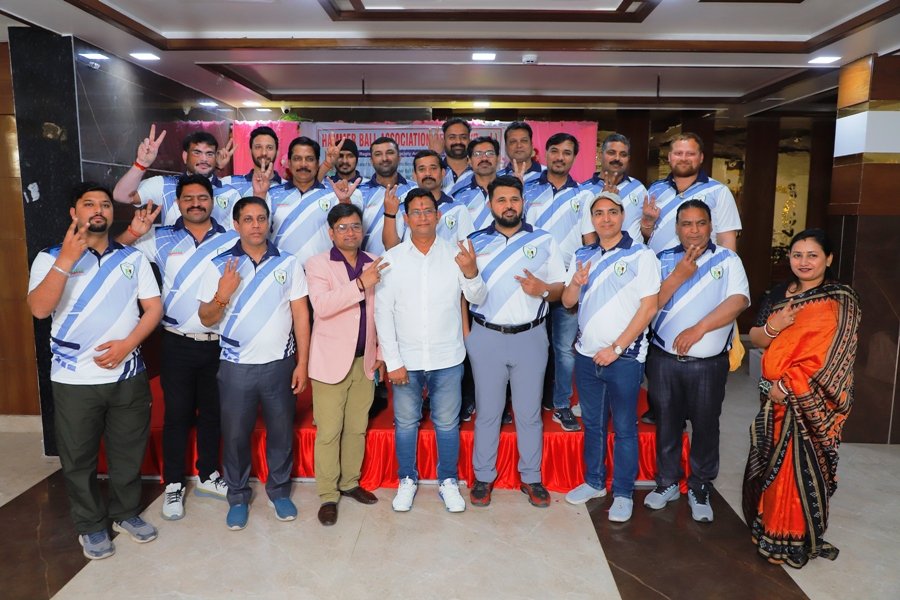
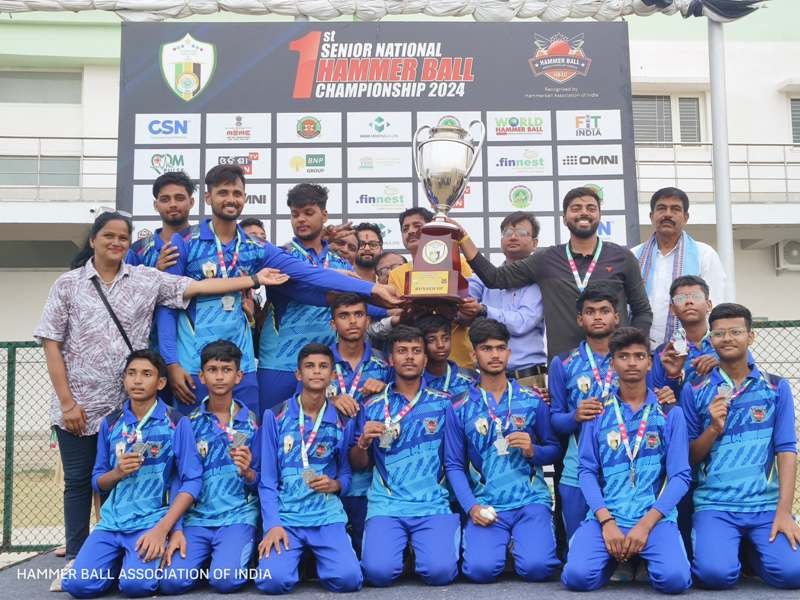
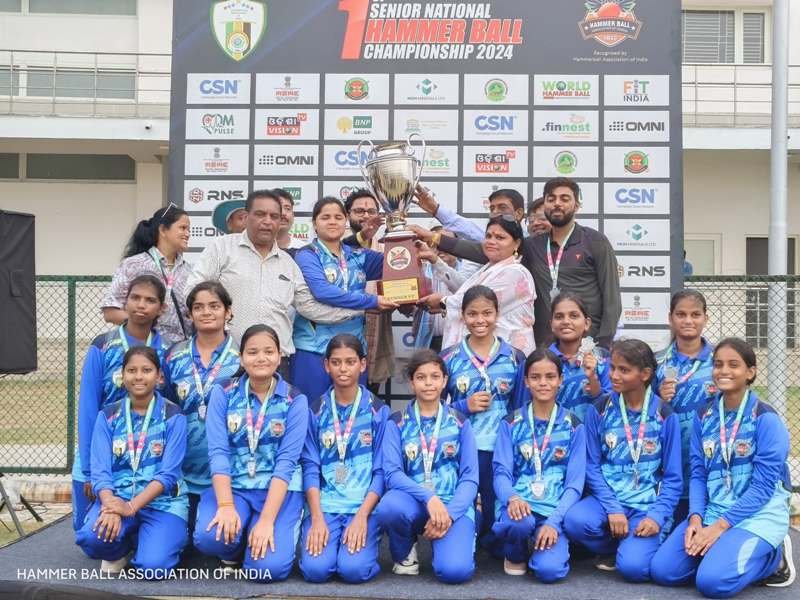

The World Hammer Ball (WHB) is the global governing body for Hammer Ball, and the Hammer Ball Association of India (HBAI) operates under WHB as its national affiliate. We are committed to developing and nurturing Hammer Ball as a recognized sport nationwide. We aim to build a strong sporting culture by organizing district, state, national, and international tournaments, providing training programs, and ensuring fair opportunities for all players.
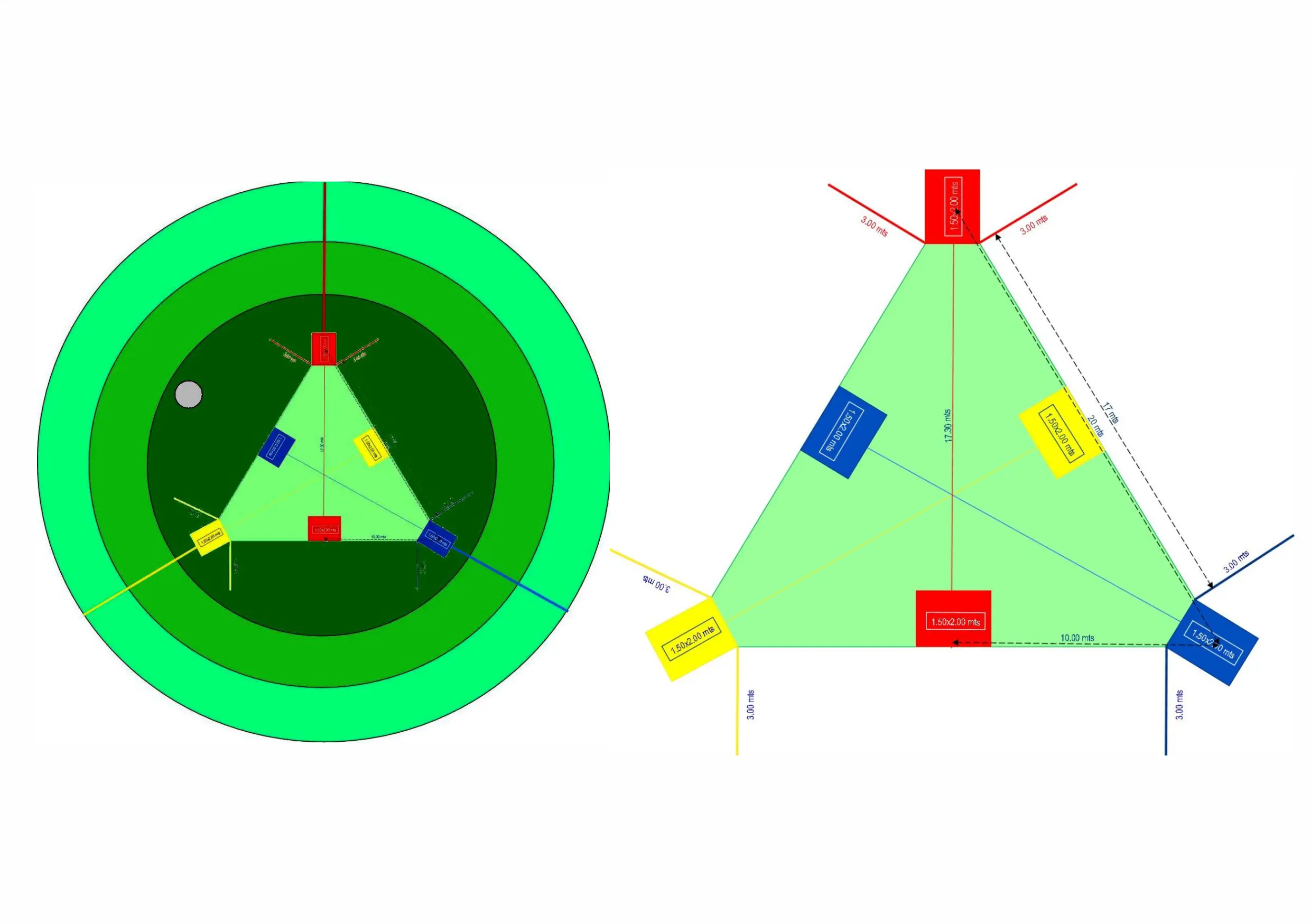
A triangular zone where throwers deliver precise, strategic balls to hitters for scoring powerful runs.
Special corner boxes inside the pitch where skilled hitters position to strike and control the ball effectively.
Marked running paths between hitter zones where players quickly sprint to complete scoring runs after striking.
Fielders positioned smartly in home, inner, and outer fields to stop runs and create dismissals efficiently.
A specially crafted wooden bat designed to strike power shots with control, speed, and long-distance precision.
A double-layered, injury-safe ball (80–120g) built for grip, bounce, durability, and smooth controlled throwing action.
A standard-sized field with well-marked zones, visible boundaries, and structured sections to ensure fair gameplay.
A specialized area near home field where keepers protect, defend goals, and coordinate the team’s defensive strategy.

The phrase “Handi Namire,” which appears in the latest PDF update circulating among scholars of contemporary family studies, serves as a cultural lens through which this phenomenon can be better understood. While the exact etymology of “Handi Namire” is still debated, it is widely interpreted as a metaphorical construct denoting “hand‑in‑hand partnership” where both parties actively shape the terms of their union. This essay will examine the historical background of marital contracts, outline the core features of a “marriage with benefits,” analyze its social and legal implications, and conclude with reflections on its potential future trajectory. 1.1 Traditional Marriage as a Socio‑Economic Pact Historically, marriage functioned less as a love story and more as a strategic alliance—linking families, consolidating wealth, and ensuring lineage continuity. In many societies, the bride’s dowry, the groom’s bride‑price, and the exchange of property were central to the contract, while affection was often a secondary concern. 1.2 The Romantic Turn The Enlightenment and later the Victorian era introduced the concept of romantic love as a prerequisite for marriage. Legal reforms—such as the abolition of primogeniture in England (1925) and the introduction of no‑fault divorce in the United States (1970s)—gradually shifted marriage from a rigid contract to a partnership based on mutual consent and personal fulfillment. 1.3 Contemporary Fluidity Today, the rise of cohabitation, same‑sex marriage, and “open” relationship models demonstrates that marriage is no longer a monolithic institution. The emergence of “marriage with benefits” is a logical extension of this fluidity, reflecting a desire to preserve the legal and social protections of marriage while customizing the relational dynamics to suit individual preferences. 2. Defining “Marriage with Benefits” A “marriage with benefits” can be understood as a legally recognized marital union that explicitly incorporates negotiated benefits beyond the traditional expectations of fidelity and procreation. These benefits may include, but are not limited to:
| | Typical Benefits | Examples | |--------------|---------------------|--------------| | Emotional | Structured emotional autonomy | Agreement to pursue individual friendships, personal hobbies, or emotional support networks without requiring spousal approval. | | Sexual | Open‑relationship clauses | Permission for consensual extramarital sexual encounters, provided they meet pre‑agreed boundaries (e.g., safe‑sex practices, disclosure rules). | | Financial | Income‑sharing or independent economies | Joint ownership of assets while retaining separate bank accounts; stipulations for salary allocation to personal projects. | | Professional | Career‑support provisions | Guarantees of flexible work schedules to pursue education, entrepreneurship, or artistic endeavors. | | Parental | Shared or independent child‑rearing plans | Options for each partner to decide on the number, timing, and methods of raising children, including adoption or surrogacy. | marriage+with+benefits+handi+namire+pdf+upd
An essay inspired by the concept “Handi Namire” (as referenced in the recent PDF update) Introduction The institution of marriage has been a cornerstone of human societies for millennia, traditionally defined as a legally and socially sanctioned union between two individuals, often with the primary aim of establishing a family. Yet, in the 21st‑century landscape of shifting gender norms, evolving sexual mores, and increasing economic interdependence, the conventional definition of marriage is being re‑examined. One emergent discourse is the notion of “marriage with benefits,” a term that fuses the stability of marital commitment with the flexibility of a mutually negotiated arrangement of personal advantages—be they emotional, financial, or sexual. The phrase “Handi Namire,” which appears in the
The phrase “Handi Namire,” which appears in the latest PDF update circulating among scholars of contemporary family studies, serves as a cultural lens through which this phenomenon can be better understood. While the exact etymology of “Handi Namire” is still debated, it is widely interpreted as a metaphorical construct denoting “hand‑in‑hand partnership” where both parties actively shape the terms of their union. This essay will examine the historical background of marital contracts, outline the core features of a “marriage with benefits,” analyze its social and legal implications, and conclude with reflections on its potential future trajectory. 1.1 Traditional Marriage as a Socio‑Economic Pact Historically, marriage functioned less as a love story and more as a strategic alliance—linking families, consolidating wealth, and ensuring lineage continuity. In many societies, the bride’s dowry, the groom’s bride‑price, and the exchange of property were central to the contract, while affection was often a secondary concern. 1.2 The Romantic Turn The Enlightenment and later the Victorian era introduced the concept of romantic love as a prerequisite for marriage. Legal reforms—such as the abolition of primogeniture in England (1925) and the introduction of no‑fault divorce in the United States (1970s)—gradually shifted marriage from a rigid contract to a partnership based on mutual consent and personal fulfillment. 1.3 Contemporary Fluidity Today, the rise of cohabitation, same‑sex marriage, and “open” relationship models demonstrates that marriage is no longer a monolithic institution. The emergence of “marriage with benefits” is a logical extension of this fluidity, reflecting a desire to preserve the legal and social protections of marriage while customizing the relational dynamics to suit individual preferences. 2. Defining “Marriage with Benefits” A “marriage with benefits” can be understood as a legally recognized marital union that explicitly incorporates negotiated benefits beyond the traditional expectations of fidelity and procreation. These benefits may include, but are not limited to:
| | Typical Benefits | Examples | |--------------|---------------------|--------------| | Emotional | Structured emotional autonomy | Agreement to pursue individual friendships, personal hobbies, or emotional support networks without requiring spousal approval. | | Sexual | Open‑relationship clauses | Permission for consensual extramarital sexual encounters, provided they meet pre‑agreed boundaries (e.g., safe‑sex practices, disclosure rules). | | Financial | Income‑sharing or independent economies | Joint ownership of assets while retaining separate bank accounts; stipulations for salary allocation to personal projects. | | Professional | Career‑support provisions | Guarantees of flexible work schedules to pursue education, entrepreneurship, or artistic endeavors. | | Parental | Shared or independent child‑rearing plans | Options for each partner to decide on the number, timing, and methods of raising children, including adoption or surrogacy. |
An essay inspired by the concept “Handi Namire” (as referenced in the recent PDF update) Introduction The institution of marriage has been a cornerstone of human societies for millennia, traditionally defined as a legally and socially sanctioned union between two individuals, often with the primary aim of establishing a family. Yet, in the 21st‑century landscape of shifting gender norms, evolving sexual mores, and increasing economic interdependence, the conventional definition of marriage is being re‑examined. One emergent discourse is the notion of “marriage with benefits,” a term that fuses the stability of marital commitment with the flexibility of a mutually negotiated arrangement of personal advantages—be they emotional, financial, or sexual.


Delhi |
National Championships
VSMarch 15, 2024
|

Mumbai |

Bangalore |
State Championships
VSApril 20, 2024
|

Chennai |
Delhi |
State Finals
3 : 1Feb 28, 2024
|
Mumbai |
Bangalore |
District Finals
2 : 0Feb 20, 2024
|
Chennai |
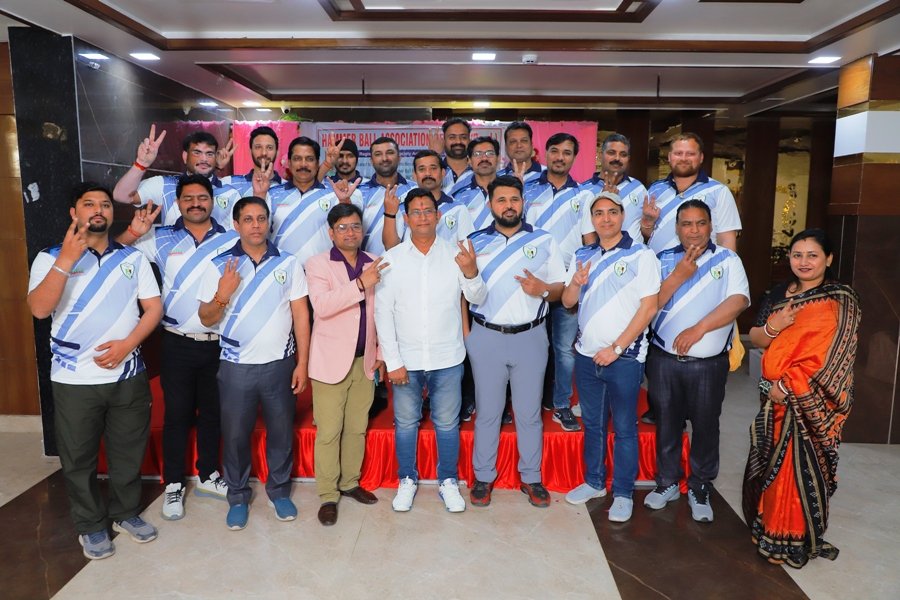
HAMMER BALL ASSOCIATION OF INDIA IS GOING TO BE ADD A NEW CHAPTER IN November 2025. THAT IS 2ND JUNIOR NATIONAL (U-19) CHAMPIONSHIP 2025 TO BE HELD SO...
| Pos | State | P | W | L | PTS |
|---|---|---|---|---|---|
| 1 | Puducherry | 0 | 0 | 0 | 0 |
| 2 |  Jharkhand Jharkhand | 0 | 0 | 0 | 0 |
| 3 |  West Bengal West Bengal | 0 | 0 | 0 | 0 |
| 4 |  Uttar Pradesh Uttar Pradesh | 0 | 0 | 0 | 0 |
| 5 |  Tripura Tripura | 0 | 0 | 0 | 0 |
| 6 |  Tamil Nadu Tamil Nadu | 0 | 0 | 0 | 0 |
| 7 |  Rajasthan Rajasthan | 0 | 0 | 0 | 0 |
| 8 |  Punjab Punjab | 0 | 0 | 0 | 0 |